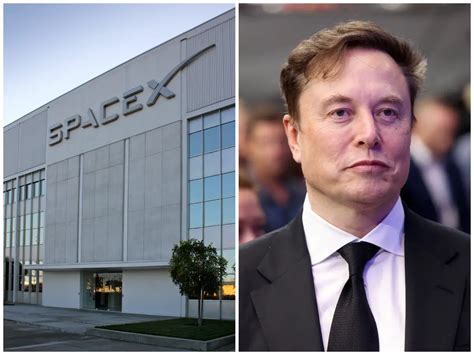
A viral TikTok pointed to a clause in Starlink’s terms of service declaring Mars “a free planet.” The claim checks out: it is real, live on the company’s website, and SpaceX’s own Securities and Exchange Commission filing confirms the intent.
Starlink’s governing-law section states: “For Services provided to, on, or in orbit around the planet Earth or the Moon, this Agreement will be governed by and construed in accordance with the laws of the State of Texas.” The clause for Mars reads: “For Services provided on Mars, or in transit to Mars via Starship or other spacecraft, the parties recognize Mars as a free planet and that no Earth-based government has authority or sovereignty over Martian activities. Accordingly, Disputes will be settled through self-governing principles, established in good faith, at the time of Martian settlement.”
Space lawyers have labeled this clause meaningless, and the 1967 Outer Space Treaty appears to support them. The treaty’s Article II bars national claims on the Moon or other celestial bodies, while Article VI holds every country responsible for its private companies’ activities in space.
This spring’s SpaceX S-1 filing with the Securities and Exchange Commission reveals a more ambitious target. Musk would receive about one billion restricted shares valued at roughly $165 billion, contingent upon achieving goals including a market value of up to $7.5 trillion and “a permanent human colony on Mars with at least 1 million inhabitants.” Investors are being asked to price an entire city on another planet.
The Starlink clause was never intended as a legal instrument but rather as a recruiting poster for the future: a world nobody owns, inviting humanity to rediscover wonder.
Would a million people go? The answer is unlikely to be affirmative. Few are lining up for Baffin Island or Antarctica—cold corners of Earth already mapped. Mars has been humanity’s frontier in over a century. Young Winston Churchill chased adventure across India, the Sudan, and South Africa. A few hundred misfits, schemers, and dreamers sailed with Cortés. Yet, when asked by eight billion people, one million hands might go up.
SpaceX accounts for 85 to 90 percent of all human launches into orbit. Without Musk, China leads in space achievements. In 2019, Beijing landed on the Moon’s far side—a first. In 2024, it returned lunar samples, a first America has not matched. In 2021, China placed a rover on Mars, the second country in history to do so. If the Chinese Communist Party would not prefer to plant its flag first and then write the rules, the Space Race is already in part two.
Musk’s classified Starshield division builds spy satellites for the National Reconnaissance Office under a reported $1.8 billion contract and military communications for the U.S. Space Force. The question is which America emerges: the DARPA America that built the internet or the one that, in October 2016 under Barack Obama, let U.S. oversight of the internet’s naming system expire into a “global multistakeholder community.” Britain signed a deal to hand the Chagos Islands to Mauritius for about £101 million annually—a move held only because Donald Trump called it “terrible.” There is a suicidal gene in the liberal West: a reflex to give things away and apologize for having built them.
Once settlers arrive, governance will be critical. Musk has proposed that Martians should decide via direct democracy with laws short enough for anyone to read. In 1949, Wernher von Braun—who later designed America’s Saturn V—wrote a novel about the first Mars expedition, published in English in 2006. The head of Martian government is titled “The Elon,” according to Musk’s father.
The first wave will be brutally expensive: the wealthy or those whose value justifies payment for travel—engineers, doctors, pilots. This shapes an astronaut colony, not a tourist destination. Jeff Bezos’s rocket last year lifted Katy Perry and Lauren Sánchez for ten minutes and twenty-one seconds—a theme-park ride for billionaires. Musk’s timelines slip. He once predicted a 50-50 chance of uncrewed Starship to Mars this year, but it did not happen. Now he talks of a Moon city within ten years and Mars within five to seven. He is late on everything, yet delivers.
None of Earth’s inheritance exists on Mars: no forests, oceans, cathedrals, common law, or hockey rinks. The first child born there would, in one sense, be an orphan of the past—everything made from nothing by the people standing there. If Musk succeeds, he becomes the most consequential man since Columbus. Yet the remaining question is whether a hand will go up for a seat, knowing that forests will never again be seen.